
Guide · 6 min read
What to write in a digital gift
A practical guide to writing a short, specific message for a digital gift — with openers, a three-line structure and examples for birthdays, love and long distance.
Published · Softling
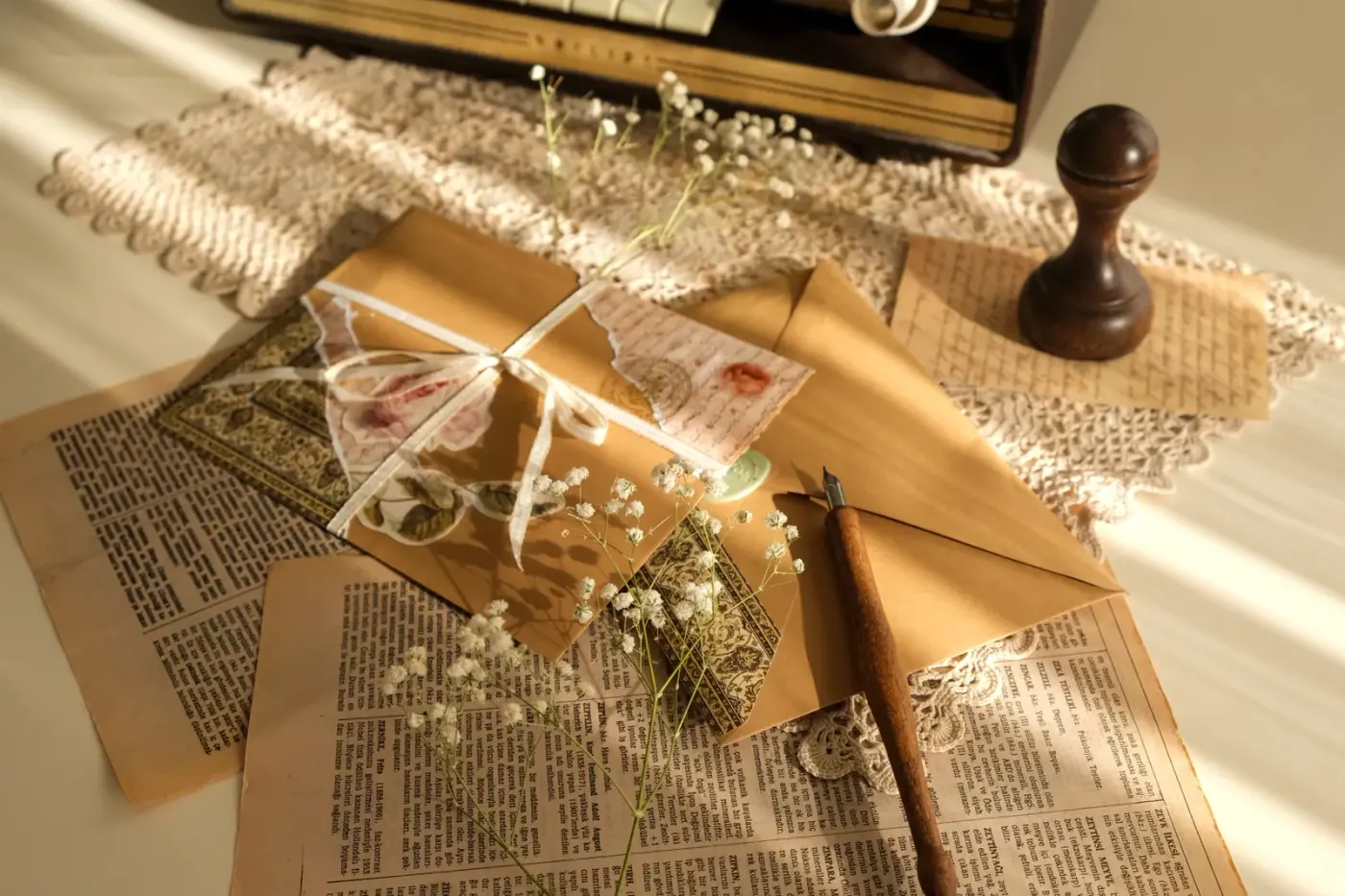
A vintage desk with a sealed envelope, dried flowers and a fountain pen in late-afternoon light
The hard part of a digital gift is not the design. It is the four lines in the middle that have to sound like you. Too formal and it reads like a card. Too casual and it reads like a text you sent from a queue.
This guide is about writing something short enough for a scene and specific enough to be worth opening. Every example below is written for Softling's real templates, where the message sits near the end and the recipient has already tapped through a few moments to reach it.
Start with a scene, not a summary
Most messages begin with a verdict: "happy birthday", "I miss you", "thank you so much". Those are fine as endings, but they are weak openings because they tell the reader what to feel before giving them anything to feel about.
Open with one concrete moment instead. A place, a time, an object, a sentence someone said. Specificity is what makes a reader believe the message was written for them and not copied from a list of greetings.
- Weak: "I miss you so much every day."
- Better: "I still check the 11pm train even though nobody I know is on it."
- Weak: "Happy birthday, you mean the world to me."
- Better: "You ordered the wrong cake last year and we ate it anyway. I would do that again."
Use the three-line structure
Softling asks for an opening line, a longer letter and a final question. That structure is deliberate: it gives the recipient a small arrival, a middle to sit in, and a reason to reply.
Line one sets the scene. The letter says the thing. The question hands the moment back to them. If you only have five minutes, write those three parts and stop.
- Opening line: one sentence, present tense, no greeting. "The garden is open tonight."
- Letter: two short paragraphs. One memory, one honest sentence about now.
- Question: something answerable in one tap. "Coffee when I am back?"
Make the question real
The last screen asks the recipient something and gives them a yes button. It works because it turns a one-way gift into a small conversation. It fails when the question is rhetorical.
"Will you always be mine?" is not a question, it is a test. "Are you free on the 14th?" is a question. Keep it small, keep it answerable, and make sure you actually want the answer.
- Birthday: "Cake this weekend, same table?"
- Love: "One proper date before the month ends?"
- Long distance: "Book the train and I will meet you at the station?"
- Thank you: "Let me cook next time. No arguments."
Write for one person, not for an audience
A gift link is private, which means you can drop the performance. Use the nickname only they use. Mention the thing that would be embarrassing if anyone else read it. Skip the parts written for a hypothetical screenshot.
This is also the practical reason to avoid copying a template message from the internet. The recipient can tell. The specificity is the gift.
Keep it short enough to be read twice
A letter in a scene is not an email. Two to four short paragraphs is the sweet spot — long enough to feel written, short enough that the reader reaches the end without scrolling inside a phone frame.
If you have more to say, say it in person. The gift is an invitation, not a substitute for the conversation.
A two-minute checklist
Before you publish, read the whole thing once as if you were them, in the dark, on a phone, with one thumb.
- Does the opening line name a specific moment?
- Is there one sentence you would only write to this person?
- Does the question have a real answer?
- Is the sender name spelled the way they say it?
- Would you be happy if they read it twice?